
Monitors
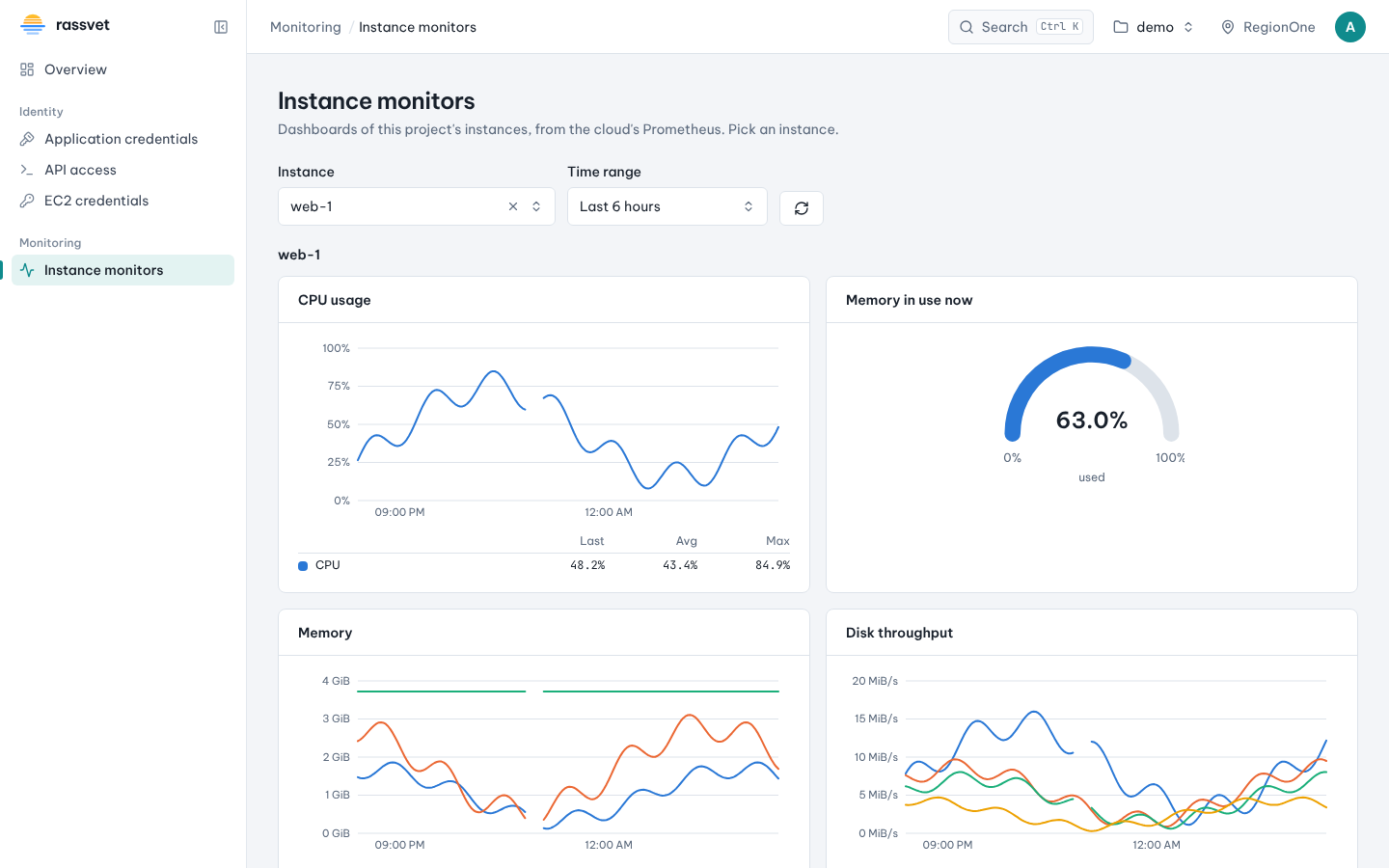
CPU, memory, disk and network dashboards for every instance and physical server, straight from Prometheus — defined in YAML, up to 60 days back.
Explore monitors →Rassvet (рассвет — “dawn”) is a single-binary dashboard for OpenStack. Rust on the server, React in the browser, Keystone tokens never leave the backend. Sign in to every cloud you run and switch between them in one click. Built for the people who live in their clouds every day.
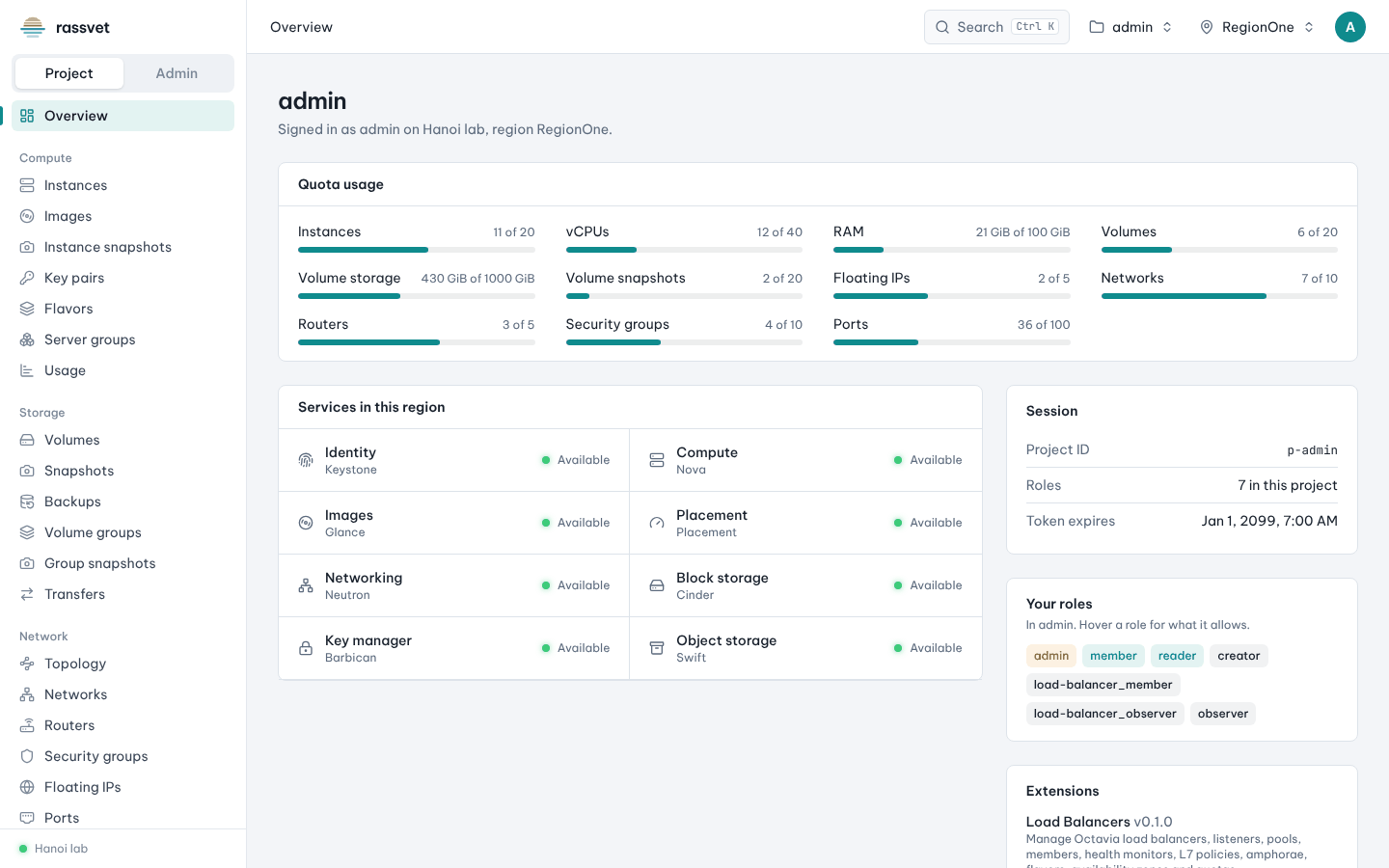
One process, one config file, a UI that is fast enough to keep up with your keyboard.
CPU, memory, disk and network dashboards for every instance and physical server, straight from Prometheus — defined in YAML, up to 60 days back.
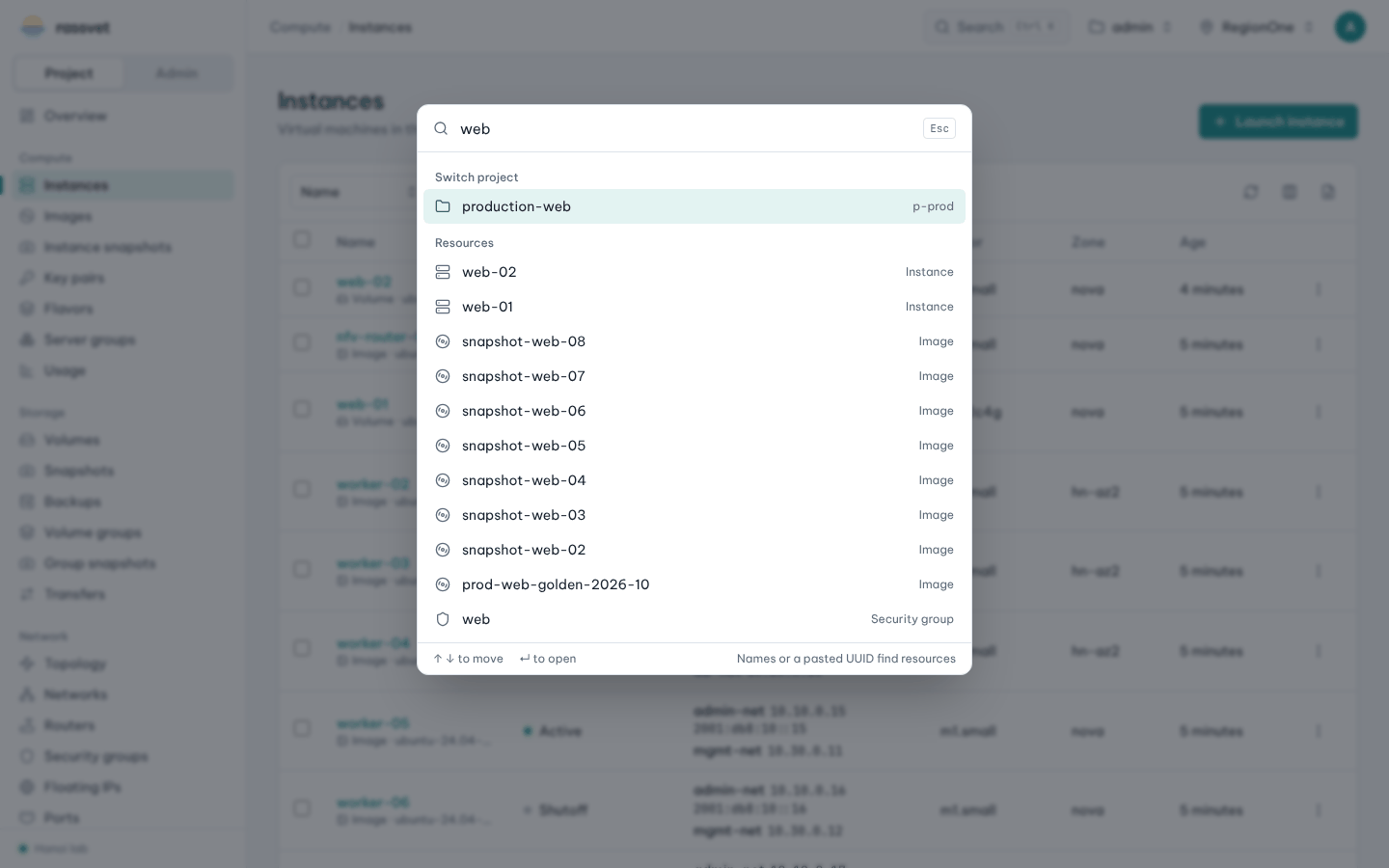
Explore monitors →Press ⌘K and go anywhere: pages, actions, resource names, IPs, CIDRs or a pasted UUID.
See it in action →An extension is a Rust crate plus a React folder. It brings its own routes, nav entries, palette actions, Terraform export and cleanup finders, and the host needs no changes. Octavia, Magnum, Designate and Monitors are all built this way.
Build one →The React UI is embedded into the Rust binary. cargo build --release and ship.
Opaque HttpOnly cookies, CSRF headers, sign-in throttling, encrypted memcached sessions.
Sign in to all your clouds at once and switch per tab without signing in again.
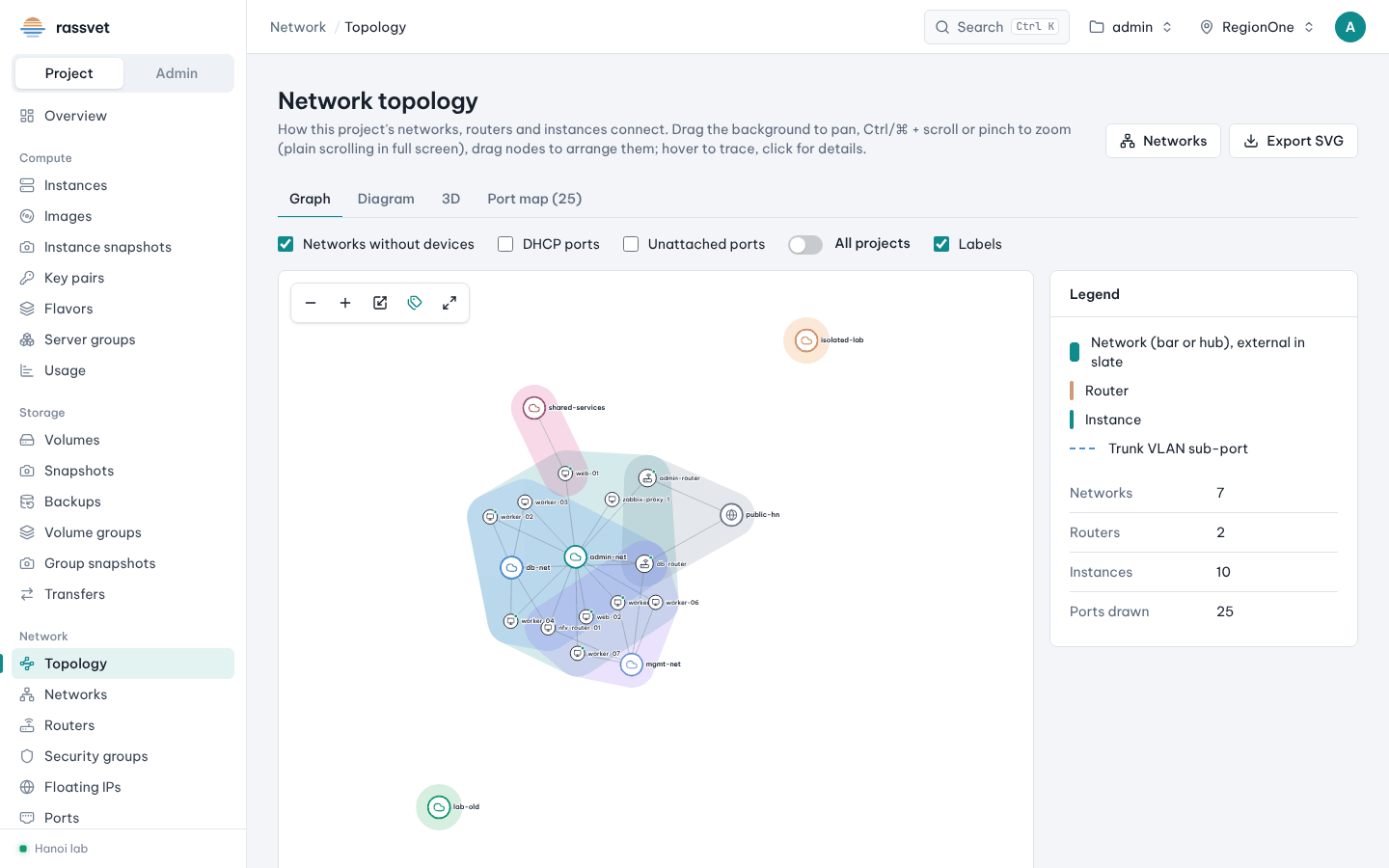
See how →Force graph, diagram and a three.js view of networks, routers and ports — export as SVG.
Turn resources you clicked together into code, with references, lookups and import blocks.
Find idle volumes, floating IPs and leftovers wasting quota — per project or across all.
Requirements: Rust 1.88+ (edition 2024), Node 22+, pnpm 10+. Copy
rassvet.example.toml to rassvet.toml and set your Keystone auth_url.
$ cd ui && pnpm install && pnpm build && cd ..
$ cargo build --release
$ ./target/release/rassvet --config rassvet.toml
# then open http://localhost:8080
$ cargo run -p rassvet -- -c rassvet.toml # API on :8080
$ cd ui && pnpm dev # UI on :5173
$ cargo test && cargo clippy --all-targets# rassvet.toml
[server]
secure_cookies = true
[memcached]
servers = ["10.0.0.11:11211", "10.0.0.12:11211"]
secret_key_file = "/etc/rassvet/session.key"